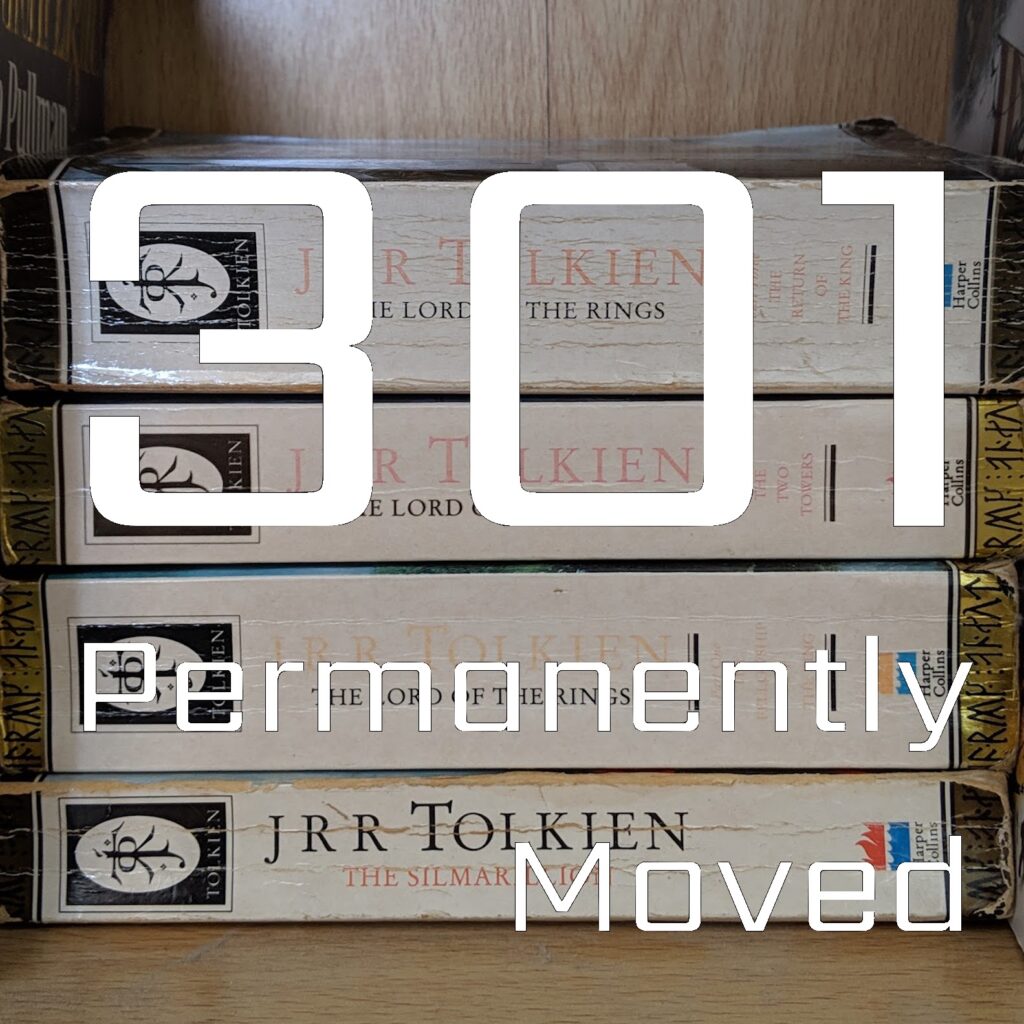
S02E06
Lord of the Rings is better than Game Of Thrones. The significance of sailing to ‘the west’ and its place in the modern collective unconscious
—
You can subscribe to Permanently Moved in itunes: permanentlymoved.online/itunes or search in all your favourite podcatchers.
Permanently moved is a personal podcast 301 seconds in length, written and recorded in one hour by @thejaymo
Quarterly zine; my gift to you ✉️




LOTR is better then GOT
At the credits of the new Game of Thrones episode this week I loudly declared to everyone in the room that Lord of The Rings was better than Game of Thrones. Everyone disagreed and shook their heads at me. So used as they are to my arbitrary opinions.
So since Monday I’ve been thinking about the WHY Lord of The Rings is better or perhaps more important. So here we go….
Lord Of The Rings is THE definitive fantasy novel, and its impact on the world cannot be overstated.
The important thing about Fantasy, perhaps the defining thing about Fantasy is that it contains magic. Fantasy re-mystifies the world, it allows us to reconsider or re-see the world through eyes that are completely open to magic and the mythical. A facet of our our culture that has been lost since the reformation and the age enlightenment.
A lot of people will go on at length about the themes and threads of Lord of The Rings. Tolkiens views towards landscape and criticisms of the industrial revolution and just stop there. This reading of the book in my opinion is lazy and boring and also not the main theme of story at all.
There’s a lot to say on the interactions and synchronicities between Tolkien and Jung’s ideas, and I direct you to the work of Becca Tarnas to read more.
But for now let’s think about the collective unconscious or the imaginal realm.
Fantasy as a genre provides a safe container within which people can explore the world anew with eyes open. In fact the existence of magic in the medium is the clear mechanism that allows people to cross the boundary from quote unquote reality and enter the world of the fantastical.
What Lord of the rings is actually about is – that it is an ending.
The entire story is about the fading or slipping away of magic and sorcery from the world and the coming of the Age of Men – ‘much what once was, is now lost’ and ‘the world is changed’ as the opening lines of the movie makes clear.
The defining point of the Return of the King is not the moment that the ring is cast into Mt Doom. But the departure of the folks from middle earth in the stories closing pages – when they sail to the west.
The Dwarfs all sail, the Elves sail, Frodo sails, and Gandulf sails away too. They leave middle earth from the grey havens and sail across an ocean. Leaving behind them the time of men.
The significant point of the story’s ending is that the characters aren’t dead. They have just gone away, to the west, and we can still reach them if only we know where to look or where to go. They remain alive in our imagination, just over the next hill as it were.
Tolkien installed these figures ‘In the west’ at the end of Lord of The Rings in our collective unconsciousness so they could remain forever alive.
Lord of The Rings is one of the first major works of 20C popular culture to reignite the mind of the pre-enlightenment. Tolkien largely abandoned his work of trying to create a mythological history of England, but instead he manifested a mythic reality into modernity and gave them space within our unconscious to continue to exist. Fantasy – again- is a safe container to explore the mindset of our ancestors.
To safely explore a world where people didn’t travel very much beyond the market, unless like frodo, they went on pilgrimage of their own that would take them well beyond the next hill.
Secondly the super natural wasn’t even questioned: magic, clairvoyance, telepathy, saints, holy wells, spirits, demons were not held within a safe container of fantasy but very much real, alive and in the world. Observable in the comings and goings in ones everyday life. Our ancestors knew as much about the world around them by direct experience as we do – which when you are honest with yourself is actually very little, and like our ancestors the rest of our world is imagined. What happens in other parts of the world don’t happen to you everything else is imagined.
As much as it probably pains our quote unquote rational mind to admit it – this is the truth. I’ve never been to California, but I can imagine it as a real place that exists over the next hill from the clues and information i’ve received via movies, stories and people who come from there. But there really is no difference between the Los Angeles of my imagination and Minas Tirith. I apologise to residents of the City of Angels for my misapprehension of the finer details of their lives as much as i do to the citizens of Gondor.
There are just as many dragons on the edge of your own world map today as there were for the creator of the psalter world map in 1265.
You see, when fundamentalists right essays about Lord of The Rings like “But it’s Only Fantasy! How Demonic Imaginations are Changing the Minds of a Generation.” they have a point and see something that the rationalists don’t.
With every iteration of Game of Thrones, HeroQuest, magic the gathering, Conan, and I hate to say it Harry-fucking-Potter, we summon these figures of the Mythical age back to the world of men.
Tolkiens ‘the west’ continues to build in power every time we draw from it, with every episode of Game of Thrones that gets made, we make the lives of those that sailed out from middle earth and into our unconscious more powerful. And that’s why Lord of The Rings is better than Game of Thrones
Newsletter 📨
Subscribe to the mailing list and get my weeknotes and latest podcast episodes, sent directly to your inbox

Leave a Reply