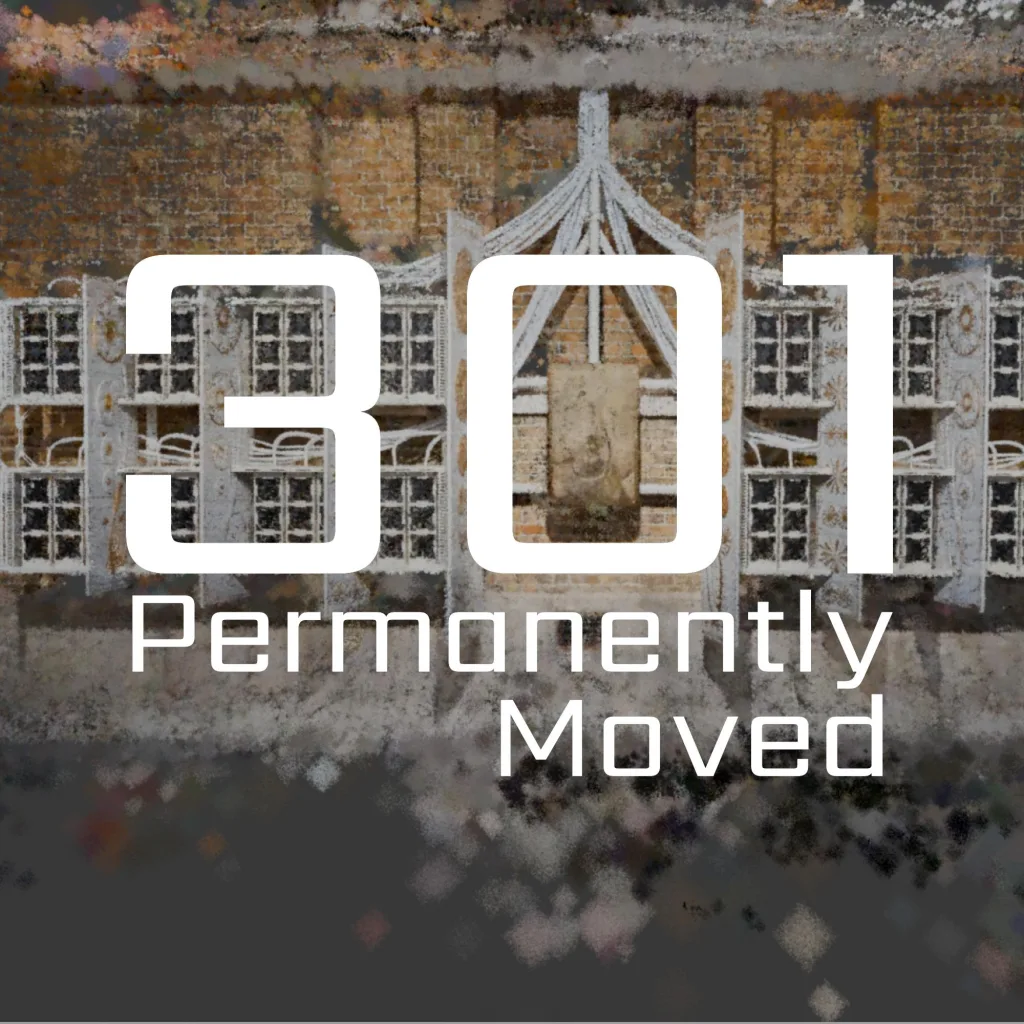
On Thursday, I was at the Serpentine Gallery in London for the opening of The Call, an exhibition by Holly Herndon and Mat Dryhurst. The work, as they write in the program, is a commentary on how “the process of collecting data raises questions about the governance and permission of its use.” and so is this episode..
See the scans in the youtube version of this episode! https://youtu.be/BXBF1MsvOlE
Quarterly zine; my gift to you ✉️




Shape Thief
I’ve become a shape thief.
Pirating the real world, acquiring artworks, and taking them home. Walking past gallery attendants like a cyberpunk Thomas Crown. Strolling out a gallery exit into a future that Microsoft already abandoned.
Back in 2017, with Windows 10 version 1703—the so-called ‘Creators Update’—Microsoft introduced the 3D Objects folder. A place in File Explorer for storing 3D models to be manipulated with the 3D Viewer app. But obviously, no one ever used it, like so many of Microsoft’s other half-realised visions.
By 2021, the folder that once had pride of place in the sidebar was gone. Microsoft’s vision of a 3D future hadn’t taken off. But for me, that empty folder was still a signal.
One of my favourite memes about the 3D Objects folder is a Twitter post from @notabigjerk. It reads: “I’ve never understood what future Microsoft was envisioning where ‘3D objects’ would be as important to the average laptop user as ‘documents’ or ‘downloads.’”

Yet here I am, a few years later—a shape thief, quietly filling a 3D Objects folder of my own.
Scanniverse
I have an app called Scanniverse.
I can point it at anything—a teacup, a room, or an artwork—and, to the outside observer, with the same motions as shooting a video, make it mine. I can capture a digital version of a thing.
The app uses gaussian splats, a cutting edge AI driven method of 3D rendering. Instead of traditional polygons, objects are represented as floating points. Each splat is made up of these points and combines them to create smooth surfaces, offering a detailed, organic representation of real-world items. Once mastered, it can capture intricate details of things with remarkable precision. No expensive depth camera required – it all happens locally on my phone.
Just as AI can currently generate images and video, in the future we’ll be able to conjure entire 3D environments from splats in latent space. But for now, we’re limited by data—there just aren’t enough scanned objects in the world to build a dataset big enough to train an AI on.
Niantic, the makers of Pokémon Go, recently acquired Scanniverse, and I think their strategy is clear. Build that dataset. With Pokémon—and before that, Ingress—by turning the material and immaterial labour of mapping into part of their gameplay loop Niantic had players map real-world points of interest. And they created a vast and valuable dataset. The same will happen with this scanning tech. Potentially with huge implications.
But let’s zoom out for a second: What am I actually doing when I scan things?
There’s a paper called 3D Digitisation of Cultural Heritage: Copyright Implications. It discusses how 3D scanning, especially when done by the public in a museum and not the institution, falls into a gray area both legally and ethically. A scan of a thing might not even be creative enough to be covered by existing copyright laws. Yet the object’s original copyright might still be owned by the artist or institution. I also wonder how this will play out when more and more people start scanning things. When Pokémon Go first launched, people got arrested for trespassing.
Is scanning the real world—pirating its topology—any different from snapping a photo though? People take photos of copyrighted things all the time. But what about scanning them? It’s messy. To me, scanning feels like a form of digital photography. But in practice, actually doing it, it feels different. Let me tell you how I know.
The Call
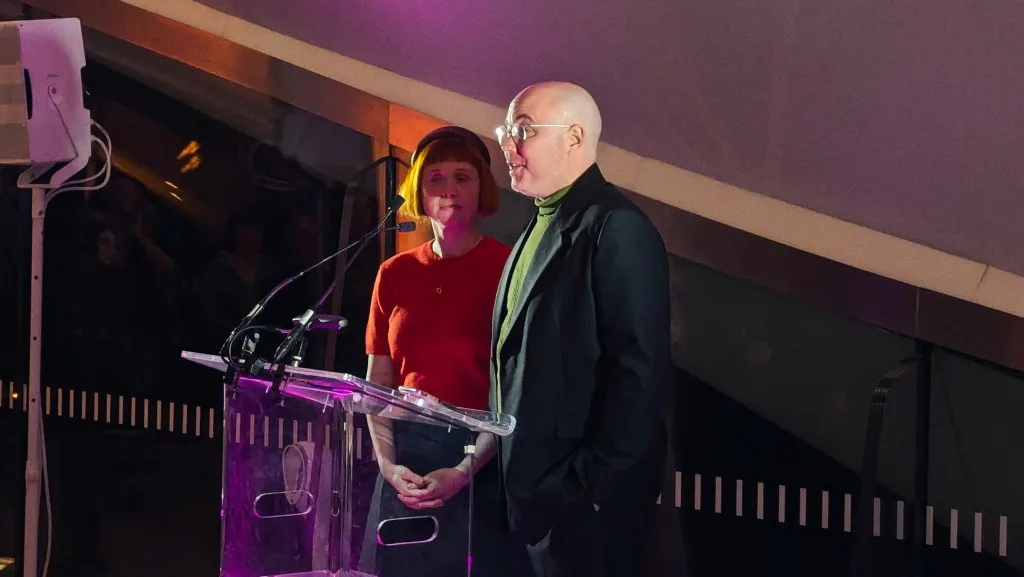
On Thursday, I was at the Serpentine Gallery in London for the opening of The Call, an exhibition by Holly Herndon and Mat Dryhurst.
The work, as they write in the program, is a commentary on how “the process of collecting data raises questions about the governance and permission of its use.”
One of their pieces is a vast organ made from GPU fans. Hymns generated by an AI diffusion model are performed by the buzzing and whirring of the fan motors. I didn’t take a photo of it, though many people did. Instead, I scanned it.
It took me less than a minute. I pointed my phone at a thing. No different than shooting a TikTok video.
The Call also features an interactive AI model trained on 15 choirs from across the UK. As part of the work Mat and Holy created an innovative legal Data Trust, allowing all the participants to retain control of their contributions. A vision of collective data ownership—protective and very forward-thinking.
Meanwhile, I generated data about their work without permission.
I keep comparing scanning to photography because Susan Sontag thought that photography was appropriation. “Stealing without touching—merely a semblance of knowledge”. What’s the difference between me and an AI model? Between a human shape thief and a machine?
I also mention photography and data because sometimes I compare people who think AI steals art to thinking a camera stealing souls – but that’s a whole other rant for another episode.
Anyways…
With new cultural technologies like AI, the ethics and ownership of data are more important than ever. Who produced it? How was it produced? Where and why? I actually, personally don’t think the current conversation should be at the level of individual artists or about individual works. Instead it should be about culture, in totality.
Holly and Mat’s Data Trust is the most important part of their exhibition. It challenges us all to collectively think about our collective data. Data rights and ethics—as coordination, not individual rights.
This should be the sharp edge of the current AI conversation

Subscribing to SSRZ supports my online work and creative projects.
As a thank you, I send you my zine four times a year, just like it’s 1994.
No spam. No email. Cancel at any time.


Leave a Reply